
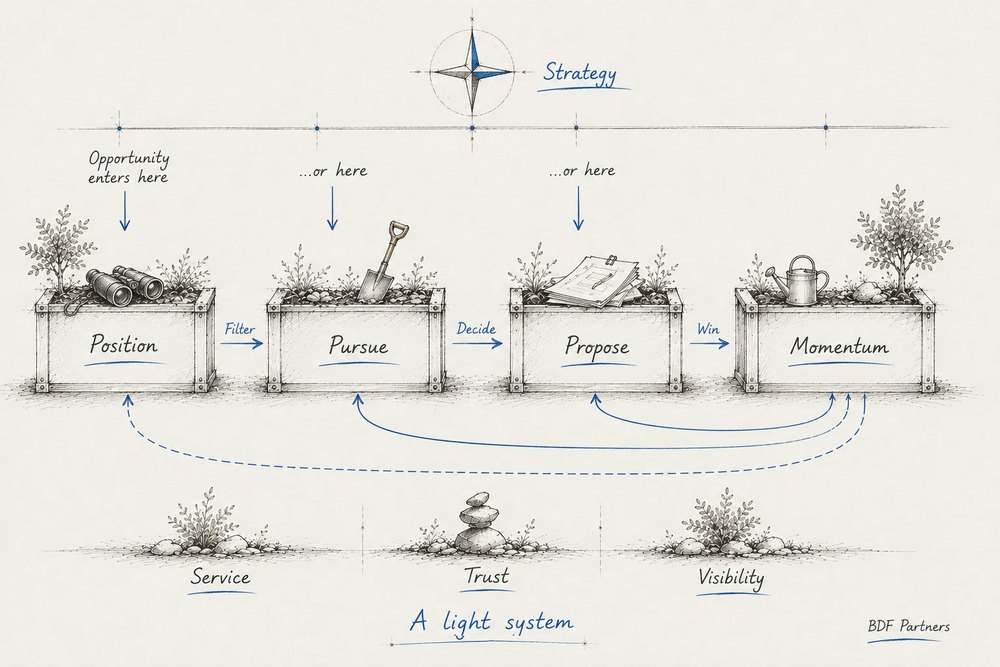
The BDF Process is a loop, not a funnel
A light, strategy-led BD system in four phases: position, pursue, propose, and turn delivery into the next opportunity. What keeps it alive, and why installing it is harder than following it.
The previous piece looked at what already exists for winning work in technical services and found a gap: a light, strategy-led system that the firm owns, sized for a small or mid-sized firm. The BDF Process is built to fill that gap. It is a light, repeatable cycle that follows how the work already flows: position, pursue, propose, and turn delivery into the next opportunity. The difference from a sales funnel is the shape. A funnel is a line that ends when the work is won. This is a loop: Momentum feeds back into the phases before it, so every finished project strengthens the system instead of emptying it.
- 1. Market Positioning translates strategy into business development: turning the firm's chosen direction into three to five clear focus areas, and building the relationships and visibility that put the firm in front of the right clients early. When the focus areas are clearly chosen, the later go/no-go decisions almost make themselves.
- 2. Opportunity Pursuit is getting into the conversation before the tender, helping a client frame a problem they have not fully scoped, and deciding early and honestly whether to pursue it. This is where work is won, long before a brief is written.
- 3. Propose is what happens when a tender arrives: a deliberate bid or no-bid, then the firm's best commercial and technical thinking in the response. A good proposal is not a surprise. It reflects months of positioning.
- 4. Momentum is the phase most firms underplay, and it is the real differentiator. Most of a firm's best work comes from delivery, from being trusted on the current project and shaping the next one while you are still in the room. This is where the loop closes and feeds back into the three moves before it.
A standing review keeps the system alive
This does not depend on heavy software or a dedicated sales team. A CRM earns its place over time, but a shared spreadsheet will do to start; what matters is one honest, shared view of the live opportunities. The heart of the rhythm is a standing review, monthly for a smaller firm and every two weeks as the pipeline grows, where the senior people who carry the relationships walk the live opportunities: what moved, what stalled, what is new. Each leaves with an owner, a next step and a date. The firms that protect that rhythm through their busiest months are the ones whose pipeline does not collapse the moment a large project lands.
The system guides the skill of winning work rather than replacing it
A system like this does not turn engineers into salespeople, and it does not turn business development into bookkeeping. It does not remove the need to be good at winning work: reading a client, shaping a conversation, asking for the work at the right moment. That ability matters enormously and always will. It is also far more teachable than most technical firms assume. The system does not replace that capability; it guides it, gives it a shared rhythm, and spreads it beyond the one or two people who have it by instinct.
Installing it is harder than following it
The four phases fit on a single page, and following them is the easy part. Installing it is less about following steps and more about reframing how a firm sees business development, and then changing how its people behave. The steps can be written down in an afternoon; shifting how a team thinks about winning work is the real work, and it takes longer.
To explore how this applies to your firm, start with a short conversation. No deck, no pitch.
Get in touch → Score your firm on the eight dimensions